



Understanding how the stock market works helps you make better financial decisions. Many beginners think trading is complicated. Once you learn the basics, the process feels simple. This guide explains how the stock market works in India, how trading happens, how prices move, and how you can start your journey with the right knowledge.
Stock markets connect buyers and sellers of shares. These shares represent ownership in a company. When you buy a share, you become part owner. When a company grows, you gain from the rise in its share price. You may also earn dividends.
This guide focuses on NSE, BSE, market structure, SEBI rules, and steps to start trading.
What Is the Stock Market
The stock market is a place where companies list their shares. Investors buy and sell these shares through a regulated system. India has two main stock exchanges. The National Stock Exchange and the Bombay Stock Exchange. Both operate under rules set by SEBI.
Companies use the stock market to raise money for growth. Investors use it to build wealth. The market works on trust, rules, and transparent systems.
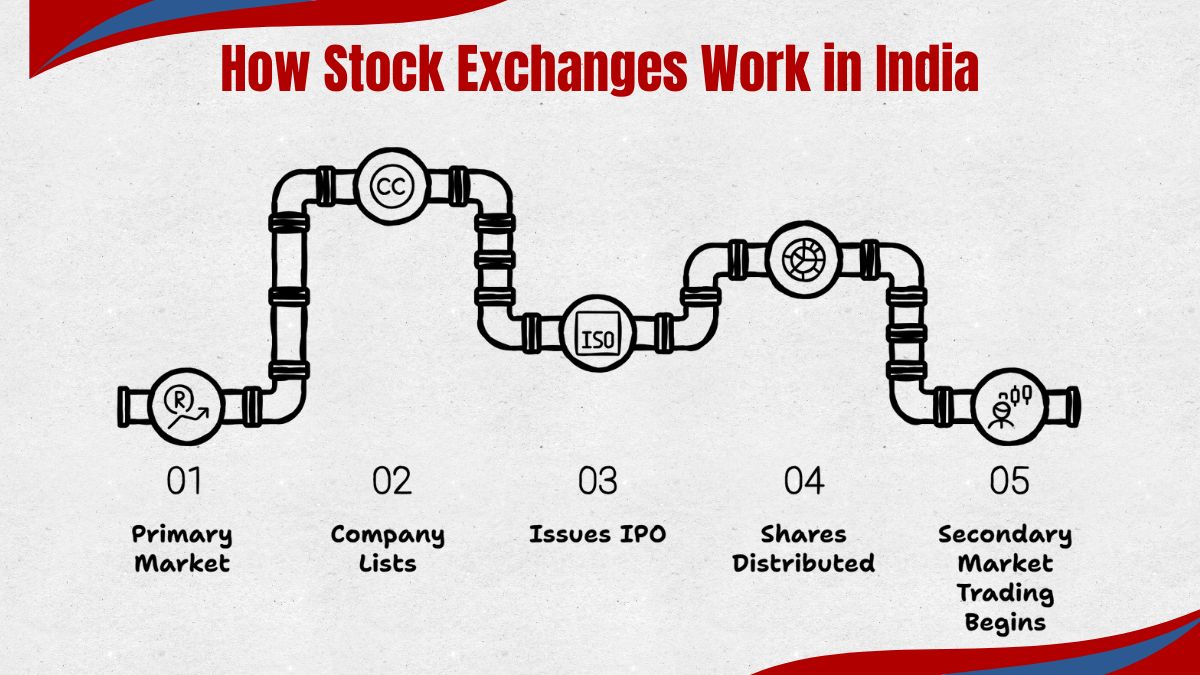
How Stock Exchanges Work in India
NSE and BSE
NSE and BSE are the two exchanges where most trading happens. NSE handles a higher trading volume. BSE is one of the oldest exchanges in Asia. Both follow strict rules. Both support electronic trading. You place orders through a broker connected with these exchanges.
How Companies Get Listed
Companies list shares through an IPO. They file documents with SEBI. SEBI checks financial data. After approval, the company sells shares to the public. Once listed, the shares trade on NSE or BSE. The market decides the price of the share every second.
How Trading Works
Trading happens through two accounts. A Demat account and a trading account. Your broker helps you open both.
Demat Account
A Demat account holds your shares in digital form. You do not get physical certificates. Everything stays in electronic format. Depositories like CDSL and NSDL manage these accounts.
Trading Account
A trading account connects you to the exchange. You use it to place buy and sell orders. Your broker sends your order to NSE or BSE systems.
Order Types
You need to know common order types.
• Market order. Buy or sell at the current market price.
• Limit order. Set a fixed price at which you want to buy or sell.
• Stop loss order. Limit your risk.
These orders help you manage trades with discipline.
Why Stock Prices Move
Stock prices move because of demand and supply. If more people buy a share, its price rises. If more people sell, its price falls.
Demand and Supply
Simple volume changes can move a stock. For example, a stock with 10 lakh average daily volume can react quickly to heavy buying or selling. This forms the basic price movement.
Market News and Results
Company results, economic data, and sector news move prices. Positive news increases buying. Negative news increases selling. Traders watch these events closely.
Who Regulates the Market
SEBI regulates the Indian stock market. SEBI protects investors. SEBI checks brokers. SEBI monitors insider trading. SEBI ensures fair trading.
Exchanges also monitor activity. They use surveillance tools to catch unusual trades. These systems maintain trust.
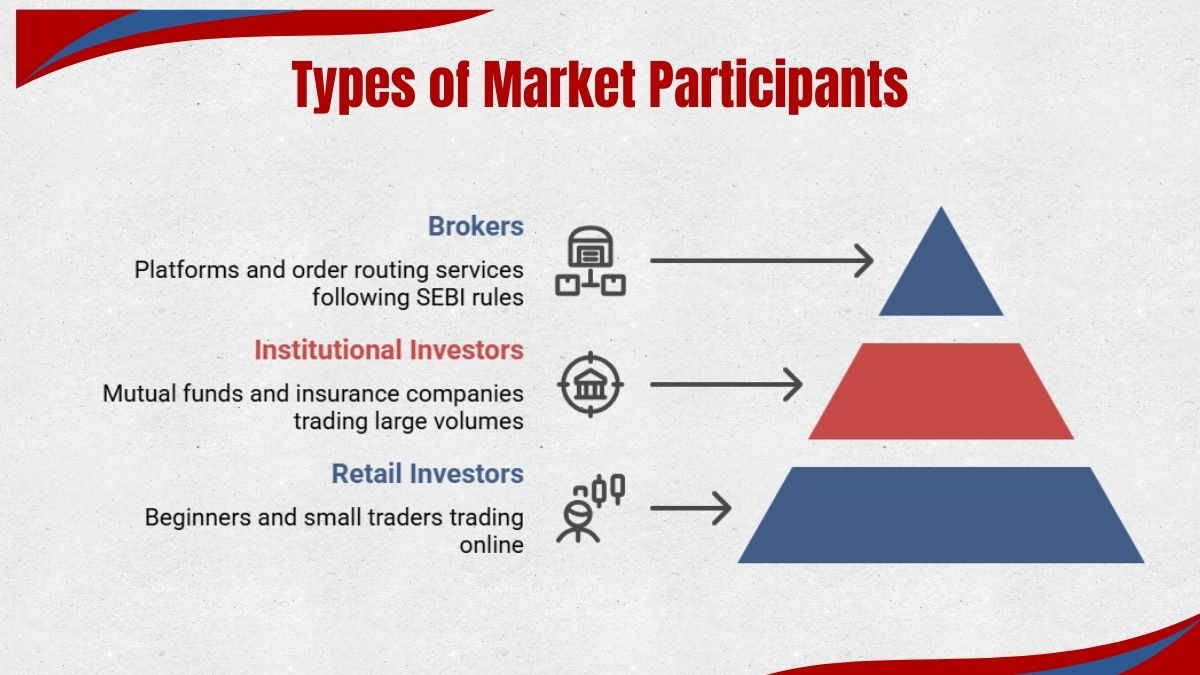
Types of Market Participants
Retail Investors
Retail investors include beginners and small traders. They trade through online platforms. They hold positions for short or long periods.
Institutional Investors
These include mutual funds, insurance companies, and foreign investors. They trade large volumes and influence market direction.
Brokers
Brokers provide platforms. They route orders. They follow SEBI rules. They charge brokerage fees. Your experience depends on the broker’s quality.
How Beginners Should Start
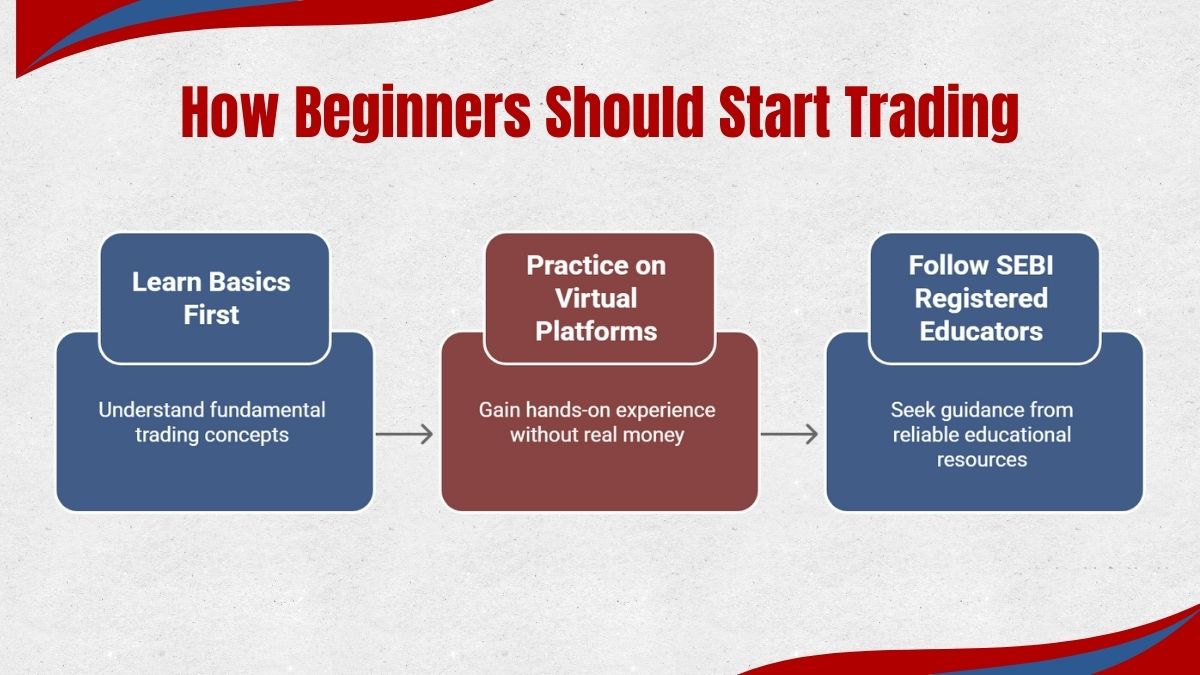
You should learn basics first. Do not follow tips. Build a simple routine.
Learn Basics First
Start with basic concepts. Understand risk, order types, and how prices move. Free content helps, but structured learning saves time.
Practice on Virtual Platforms
Use a virtual trading app. You will learn how markets react to news. You will learn how trades execute. You will gain confidence.
Follow SEBI Registered Educators
Avoid unverified tips. Use reliable educational resources. Learn step by step.
Learn With IFMC Institute
You can start your learning journey with IFMC. IFMC teaches market basics in simple language. The courses suit beginners and students.
You can start with
Each course explains concepts clearly. You learn charts, company analysis, and trading rules. You get structured lessons. You study real examples. You gain confidence to start trading with discipline.
Start Learning with IFMC to build strong foundation skills.
FAQ
How stock market works in simple words
Companies list shares on exchanges. Investors buy and sell these shares. Prices move based on demand, supply, and news.
How does trading work for beginners
You open Demat and trading accounts. You place orders through your broker. The exchange executes your trade instantly.
What is the role of SEBI
SEBI protects investors. It monitors brokers. It ensures fair and transparent trading.
How companies list their shares
Companies file an IPO. SEBI checks documents. After approval, shares list on NSE and BSE.
How stock prices are decided
Prices change constantly based on buying and selling pressure. More buyers push the price up. More sellers push the price down.