



This blog clearly explains how investors can approach a bear market intelligently and systematically build a multibagger portfolio for long-term growth. It focuses on practical strategies such as sector selection, fundamental stock analysis, portfolio diversification, position sizing, and disciplined capital allocation as part of a structured multibagger portfolio strategy. The objective is to help investors understand how value is created over time – not through tips or predictions – but through structured planning, risk management, and continuous learning.
Understanding Bear Market Investing
Stock markets move in cycles. After strong rallies, corrections and bearish phases are natural. A bear market does not necessarily mean economic collapse; it often represents valuation adjustments, or global uncertainty.
During such phases:
- Index levels may appear stable due to a few large-cap stocks.
- Broader market stocks may remain under pressure.
- Retail investors may experience portfolio drawdowns.
- Emotional decision-making increases.
This is where disciplined bear market investing becomes crucial. Instead of reacting emotionally, investors should focus on identifying quality opportunities available at better valuations. Learning structured analysis and risk management through a reputed stock market institute can further strengthen decision-making, helping investors approach market downturns with clarity, confidence, and long-term perspective rather than fear.
What Is a Multibagger Stock?
A multibagger stock is one that delivers multiple times return on the original investment.
Examples:
- ₹100 to ₹200 → 2x return
- ₹100 to ₹500 → 5x return
- ₹100 to ₹1000 → 10x return
However, multibaggers are not identified overnight. They evolve through:
- Strong sector growth
- Consistent earnings expansion
- Sound financial management
- Long-term holding discipline
The key principle is simple: Multibagger portfolios are built, not predicted.
The Farming Model of Multibagger Portfolio Strategy
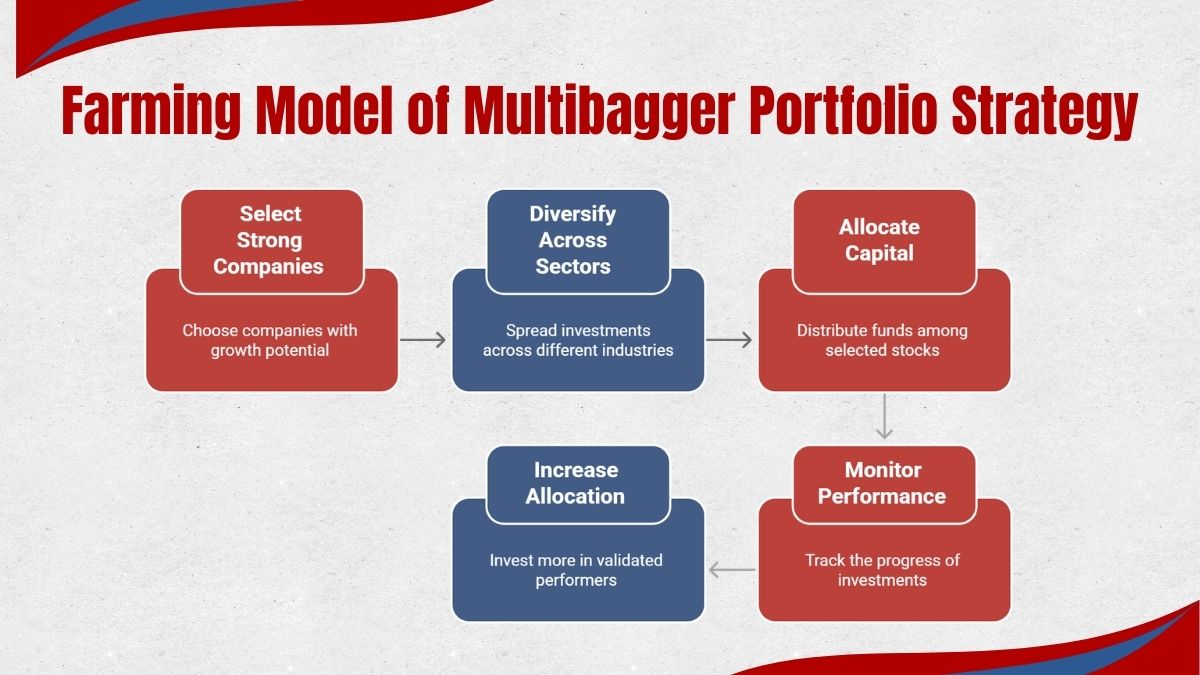
Building a multibagger portfolio strategy can be compared to farming.
A farmer plants multiple seeds. Some grow slowly, some fail, and a few outperform significantly. Over time, the best crops determine total success.
Similarly, investors should:
- Select multiple strong companies.
- Diversify across sectors.
- Allocate limited capital per stock.
- Monitor performance patiently.
- Increase allocation only in validated performers.
This structured approach reduces reliance on a single stock and increases the probability of long-term success.
Step 1: Identify Future Growth Sectors
The foundation of long term investing in India begins with selecting sectors that have structural growth potential.
Examples include:
- Technology and digital innovation
- Manufacturing and industrial expansion
- Renewable energy transition
- Infrastructure development
- Financial services growth
- Healthcare and pharmaceuticals
Professional guidance through a stock market course for professionals helps investors understand sector rotation and macroeconomic trends.
Step 2: Conduct Fundamental Stock Analysis
After sector selection, investors must perform detailed fundamental stock analysis. Key factors include:
- Revenue growth consistency
- Profit margin expansion
- Debt-to-equity ratio
- Return on Equity (ROE)
- Return on Capital Employed (ROCE)
- Promoter integrity
- Institutional participation (FII/DII interest)
While fundamentals form the base, combining them with skills like technical analysis strengthens entry and exit timing.
Step 3: Portfolio Diversification Strategy
A disciplined portfolio diversification strategy helps reduce risk concentration.
Instead of investing heavily in one or two stocks:
- Spread capital across 8–10 sectors.
- Allocate smaller amounts per stock.
- Avoid emotional overexposure.
Diversification ensures that even if some stocks underperform, the overall portfolio remains stable.
Step 4: Position Sizing in Trading and Investing
Position sizing in trading is one of the most powerful risk management tools.
It means:
- Limiting allocation per stock.
- Avoiding overexposure.
- Investing only capital not required for several years.
For example, if your portfolio is ₹5,00,000, allocating ₹2,50,000 to one stock increases emotional and financial risk. Balanced allocation improves stock market risk management.
Avoiding Common Bear Market Mistakes
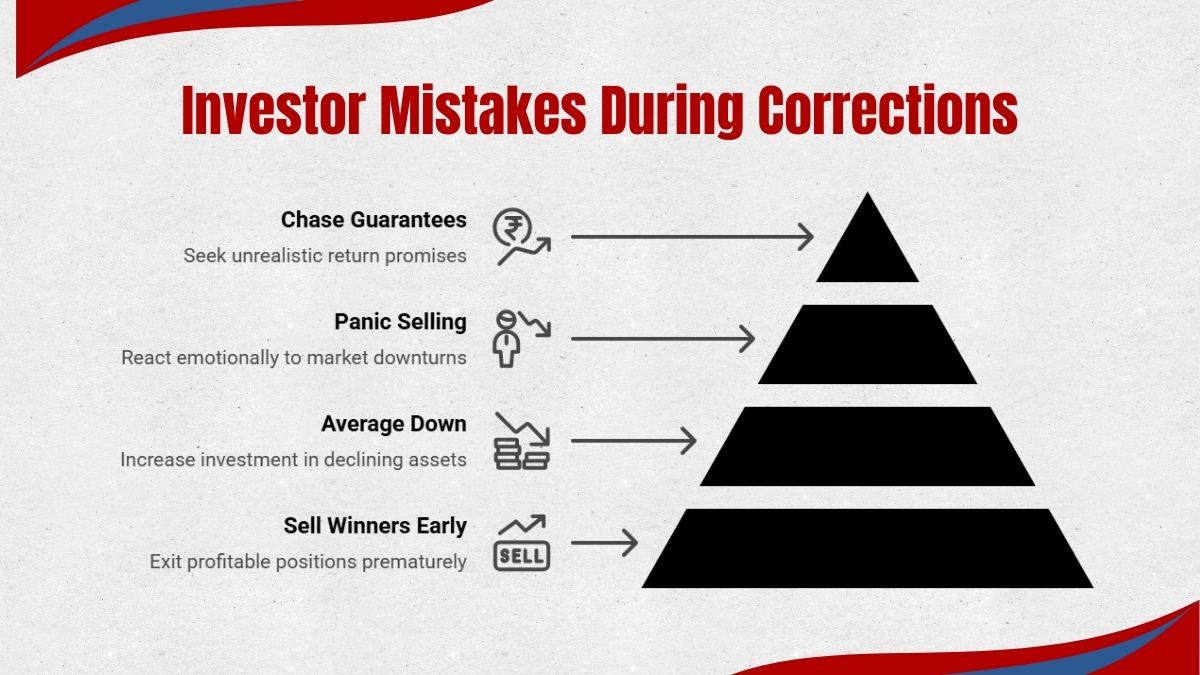
During corrections, investors often:
- Sell winning stocks too early.
- Average aggressively in weak stocks.
- Panic during sharp declines.
- Chase unrealistic return guarantees.
One of the biggest mistakes is exiting strong stocks prematurely. A stock that moves from ₹100 to ₹200 may still be in the early stages of its growth journey.
Education through certified programs like an online certificate in stock market or NCFM course helps reduce emotional errors.
Add to Strength, Not Weakness
A professional strategy suggests:
- Avoid excessive averaging in consistently declining stocks.
- Gradually add to fundamentally strong stocks during healthy corrections.
- Increase allocation only after confirmation of strength.
This disciplined capital allocation supports sustainable compounding.
Applying SIP Approach in Direct Equity
SIP (Systematic Investment Planning) is not limited to mutual funds.
Investors can:
- Add small amounts regularly to strong companies.
- Invest during price corrections.
- Maintain a long-term horizon.
This structured method improves cost averaging and builds conviction.
The Importance of Professional Stock Market Education
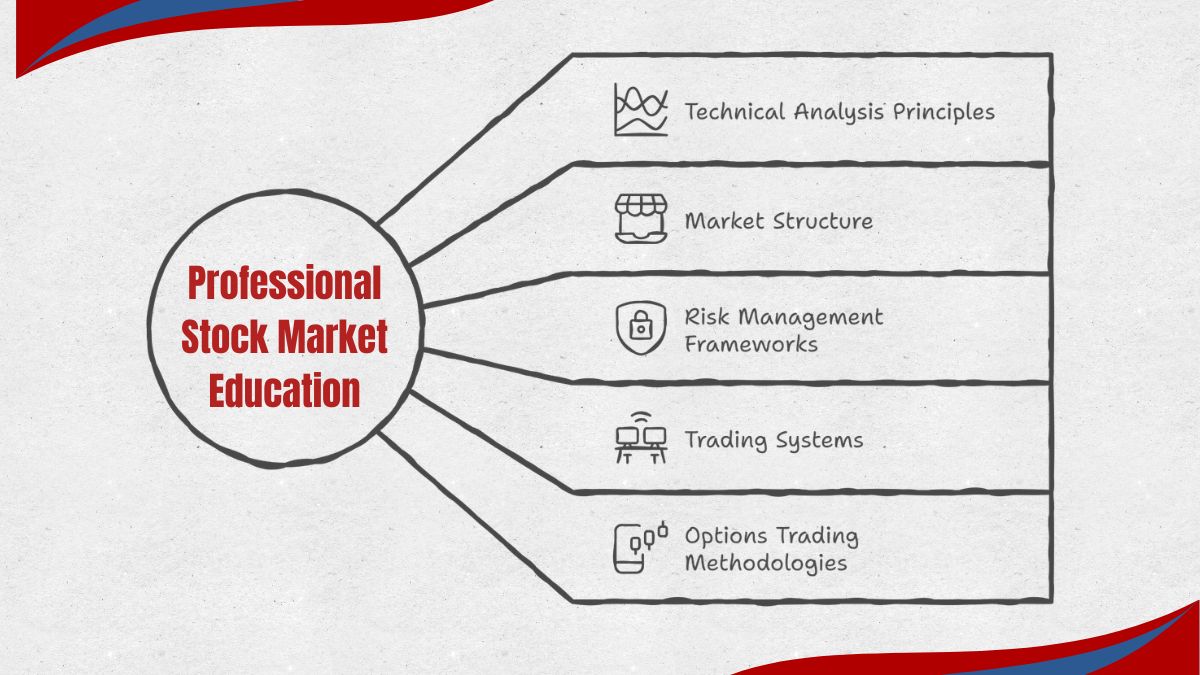
Independent learning enhances confidence and reduces emotional errors. Structured stock market education in India helps investors understand:
- Technical analysis principles
- Market structure
- Risk management frameworks
- Intraday and positional trading systems
- Options trading methodologies
At IFMC Institute, students are trained in rule-based methodologies designed to simplify complex trading decisions.
The institute offers programs such as:
- Intraday Trading Course India
- Options Trading Training India
- Portfolio management strategies
- Risk management workshops
Structured education transforms uncertainty into clarity.
Risk Management: The Foundation of Survival
The first rule of investing is survival. Even the best strategy fails without proper stock market risk management.
Risk management includes:
- Position sizing discipline
- Avoiding leverage during uncertainty
- Emotional control
- Long-term investment horizon
Investors who survive bear markets are best positioned to benefit from future recoveries.
Conclusion
A successful multibagger portfolio strategy requires:
- Sector research
- Strong fundamental screening
- Portfolio diversification
- Strategic position sizing
- Long-term patience
- Continuous learning
Bear markets should not be feared. They should be approached with preparation and discipline.
With structured planning and professional guidance from IFMC Institute, investors can build the confidence and skills required for sustainable growth in the stock market.
Frequently Asked Questions (FAQs)
1. How can I start learning stock market investing professionally?
You can enroll in a certified program such as a diploma in stock market, NCFM course, or online technical analysis course offered by a reputed stock market institute.
2. Is a technical analysis course useful during a bear market?
Yes. Technical analysis helps identify support levels, trend reversals, and strength confirmation, which is crucial during volatile phases.
3. What is the difference between an intraday trading course and a long-term investing course?
An intraday trading course focuses on short-term price movements and execution strategies, while long-term investing programs emphasize portfolio building and growing strategies.
4. Are online stock market courses effective?
Yes. A structured online certificate in stock market or online intraday trading course provides flexibility while covering essential risk management and analysis frameworks.
5. Which course is best for options trading?
An online option strategy course or option strategy NCFM module is suitable for learning structured options trading strategies with defined risk management principles.